Qui sommes-nous? Who are we?
Greenleaf Primary School, London, England
Ecole Mulsant, Roanne, France
Instituto Comprensivo di Zogno, Italy
CEIP Las Culturas, Torrevieja, Spain
Vali Mehmet Lütfullah Bilgin Orta Okulu, Gaziantep, Turkey
Affichage des articles dont le libellé est Royaume Uni. Afficher tous les articles

dimanche 30 novembre 2014

A video from Greenleaf... Un reportage des élèves de Greenleaf


Pupils of Greeanleaf, London, worked on the shortages of water around the world and they experimented the quality of water... The video is too heavy to be uploaded here, but you have to follow this link: it's so interesting!!!

http://videocentralhd.lgfl.org.uk/Play.aspx?id=BF7H79a4oJ0ikH

dimanche 8 juin 2014

Posters competition

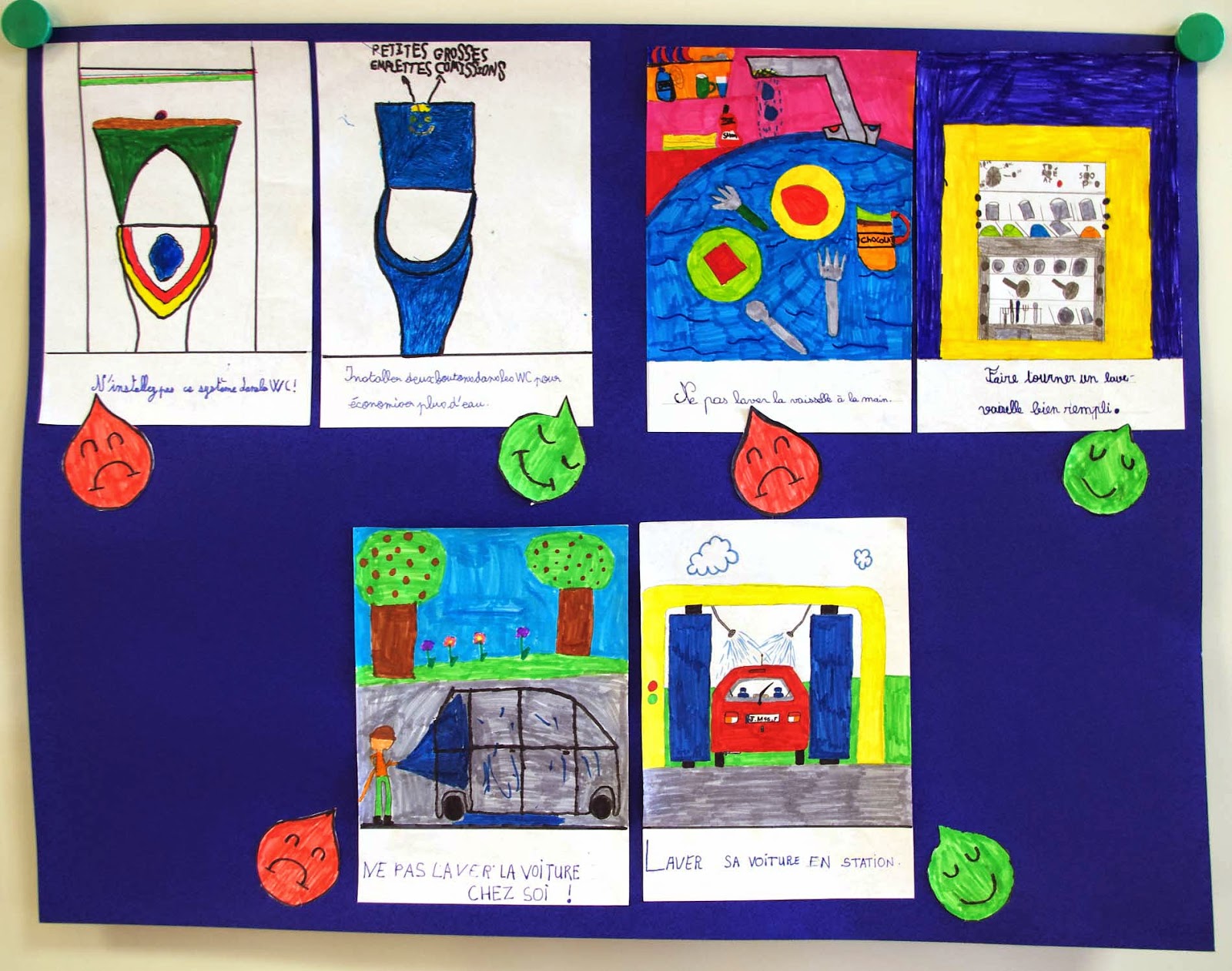
Last May 21st, the school Las Culturas, Torrevieja organized an exhibition with the posters made by students of each school of the group. Students have worked during one month about how reduce and preserve the water at home, at school, in everyday life.
This is the poster created by the youngest students of Las Culturas, Torrevieja:


Posters made by students of Greenleaf Primary School, London:


Posters from students of Roanne, France:


Posters from Gaziantep, Turkey:


Posters from Zogno, Italy:


mercredi 5 mars 2014

Posters about water: changing states and meltings / Affiches sur les changements d'état de l'eau et les mélanges, Greenleaf School of London

Posters made by the Year 5 science club of Greenleaf School, showing the changing states of water and meltings with water.
Ces affiches ont été réalisées par les élèves de 5ème année de l'école de Greenleaf, à Londres et montrent les différents états de l'eau et des mélanges réalisés avec l'eau.


jeudi 27 février 2014

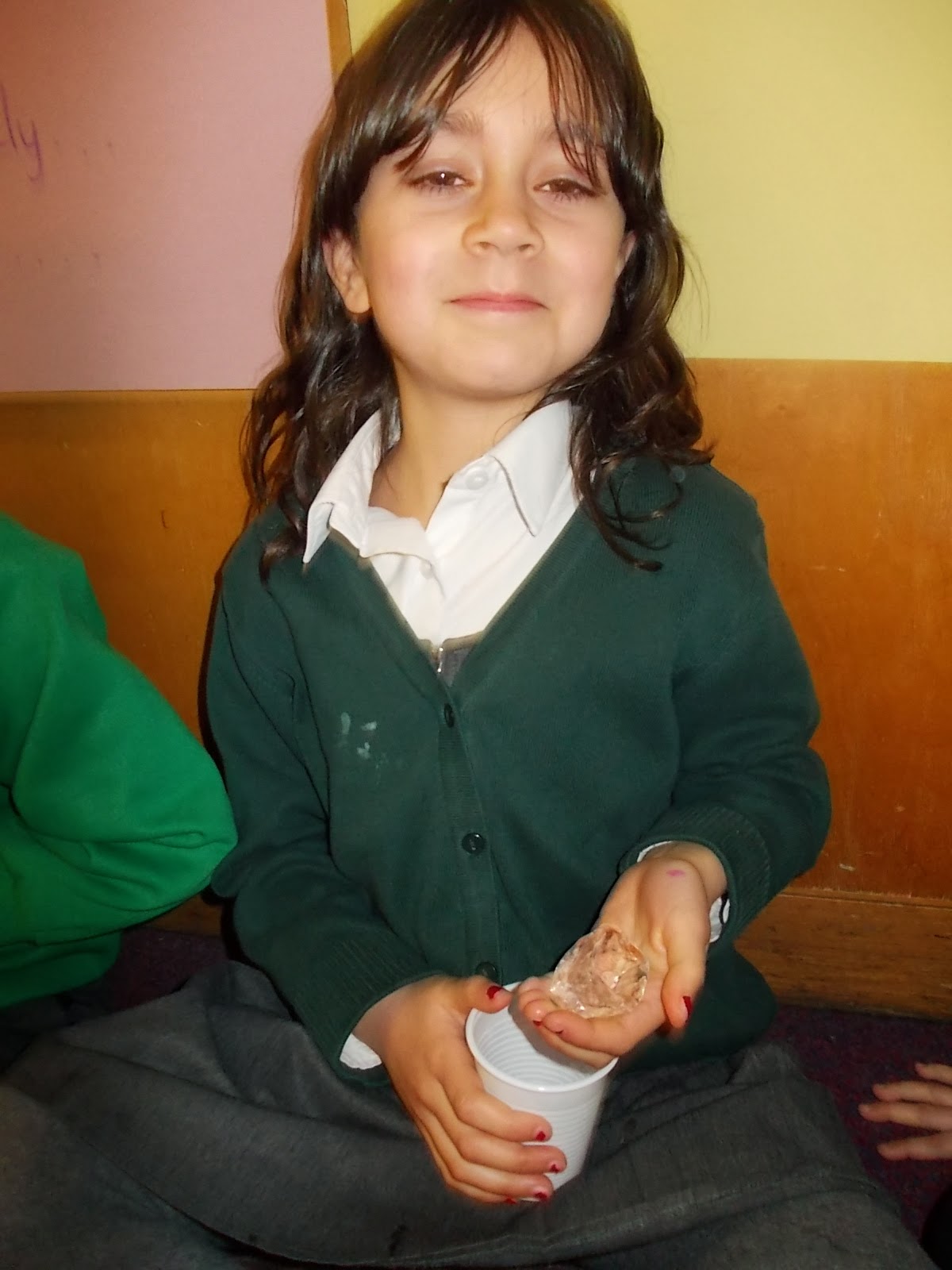
Ice balloons, experiment from Greenleaf, expérience de Greenleaf, esperienza di Greenleaf, experimento de Greenleaf

In year 2, we did an experiment about ice balloon for our Comenius project.
We discussed questions like:
What does water look and feel like?
  • Water moves around when you wiggle the pot. (Isitan)
  • Water can be cold, hot or warm. (Zainab)
  • Water is transparent – it is see through (Matilda)
  • Water is any shape you like, because if you put it in a cup, it will be round (Lorenzo)
  • Water drips off you when you come out of the pool (Precious)
We compared water and ice
  • Water is like ice because it is the same material (Rehman)
  • Ice is hard but water is not (Matei)
We put the water balloon in the freezer and made predictions about what would happen
  • When you put a water balloon in the freezer, incised the balloon the water will freeze and turn the balloon to ice. (Hassan)
  • It will turn to ice because the freezer is cold (Dadon)
We put salt and food colouring on the ice balloon and observed what happened.
  • The ice melted more quickly when we put the salt on it (Elvin)
  • The salt is going inside the ice and melting it (Khadija)
  • The food colouring went inside the ice because it has little holes (Hadiyah)
We talked about how this science might be useful

  • If you put salt onto the ground, it stops it being ice, so it won’t be slippery (Viktor)
  • It would help when you’ve been snowed in because then you could get out of the house.   


Traduction en français:
Nous avons fait une expérience sur les "ballons glacés" pour le projet Comenius.
Nous nous sommes posés quelques questions:
A quoi ressemble l'eau?
  • L'eau se répand partout si on renverse le récipient. (Isitan)
  • L'eau peut-être froide, chaude ou tiède. (Zainab)
  • L'eau est transparente - on voit à travers (Matilda)
  • L'eau peut prendre n'importe quelle forme, parce que si on la met dans une tasse, en devient ronde (Lorenzo)
  • Quand on sort de la piscine, l'eau ruisselle sur nous (Precious)
Nous avons comparé l'eau et la glace
  • L'eau et la glace sont pareilles car c'est la même matière (Rehman)
  • La glace est dure, pas l'eau (Matei)
Nous avons placé le ballon rempli d'eau dans le congélateur et nous avons émis des suppositions sur ce qu'il allait arriver
  • Si on met le ballon rempli d'eau dans le congélateur, si on coupe l'enveloppe du ballon l'eau sera gelée et rendra le ballon glacé. (Hassan)
  • Le ballon sera glacé car le congélateur est froid. (Dadon)
On a mis du sel et du colorant alimentaire sur le ballon glacé et observé ce qui se passait.
  • La glace fond plus vite quand on la sale. (Elvin)
  • Le sel va à l'intérieur et le fait fondre. (Khadija)
  • Le colorant alimentaire va à l'intérieur de la glace car elle a des petits trous. (Hadiyah)
Nous avons discuté pour savoir à quoi cela pourrait servir.

  • Si on met du sel sur le sol, il arrêtera le gel, donc il ne sera pas glissant. (Viktor)
  • Ce serait utile lorsque tout est enneigé pour sortir des maisons.